
Electrical Safety
EICR Requirements for Landlords in Kent: What You Need to Know
Read article

Understanding the risks of outdated fuse boards and when to upgrade in ME9 and ME10
Sittingbourne has a diverse housing stock — from Victorian terraces in the town centre and post-war semis in Murston and Kemsley, to newer developments around the Milton Creek area. A significant proportion of the older properties in ME9 and ME10 still have electrical systems that were installed decades ago, including fuse boards that predate modern safety standards by 20, 30, or even 40 years.
If your home still has an old fuse board — sometimes called a fuse box, consumer unit, or distribution board — this guide explains what type you might have, what the risks are, and when upgrading to a modern consumer unit makes sense.
Not all old fuse boards are equally problematic. The key question is whether your board has modern RCD (Residual Current Device) protection. Here is a quick guide to the main types you might find in a Sittingbourne property:
| Board Type | Era | RCD Protection? | Risk Level |
|---|---|---|---|
| Rewirable fuse board (ceramic fuses) | Pre-1970s | None | High — no protection against electric shock or earth faults |
| Cartridge fuse board | 1960s–1980s | None | Moderate — better than rewirable but still no RCD protection |
| Old MCB board (no RCD) | 1980s–1990s | None | Moderate — MCBs protect against overload but not electric shock |
| Dual-RCD consumer unit | 1990s–2010s | Partial — two RCDs | Low — but nuisance tripping can be an issue |
| RCBO consumer unit | 2010s–present | Full — one RCBO per circuit | Lowest — current best practice |
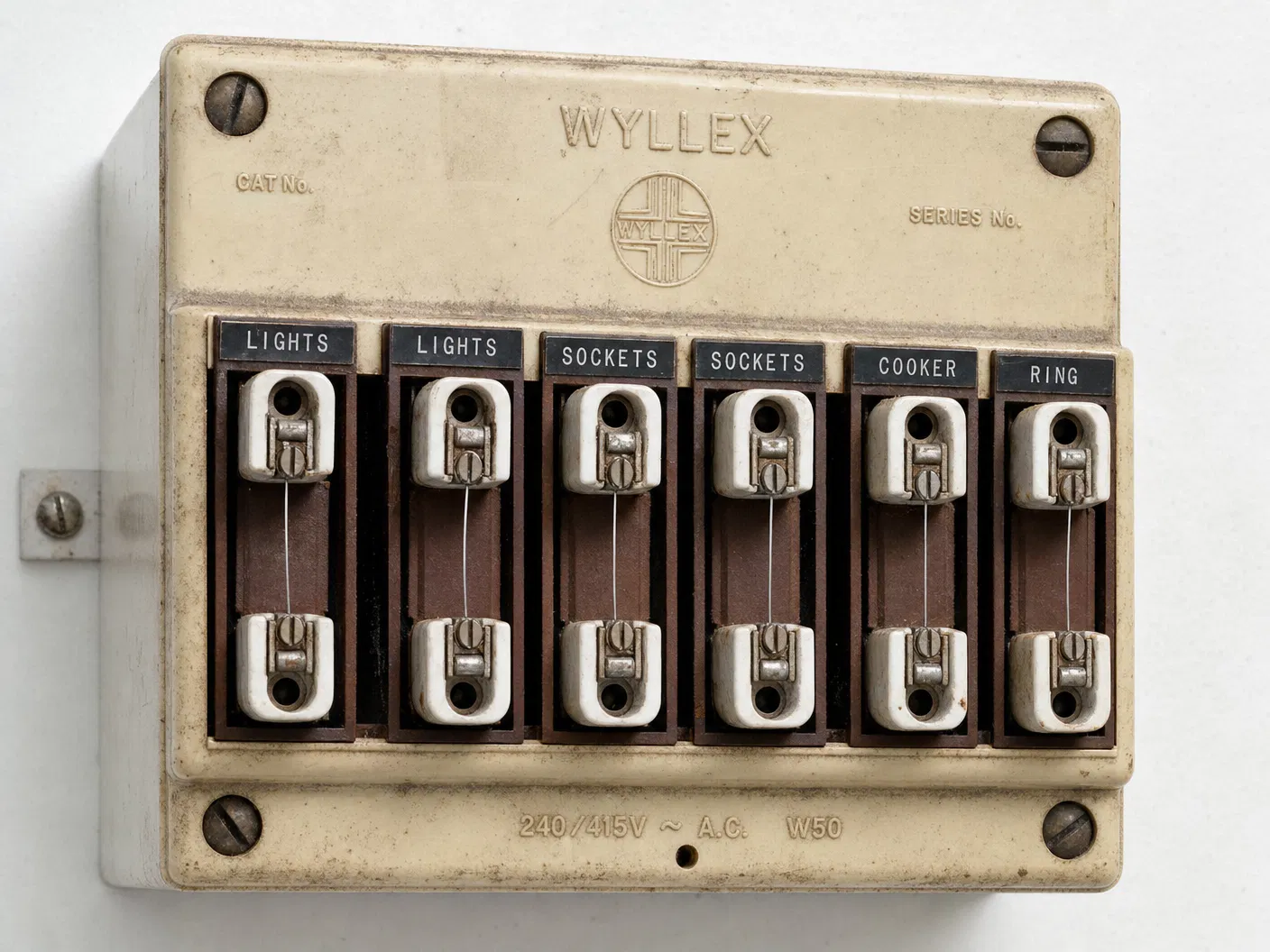
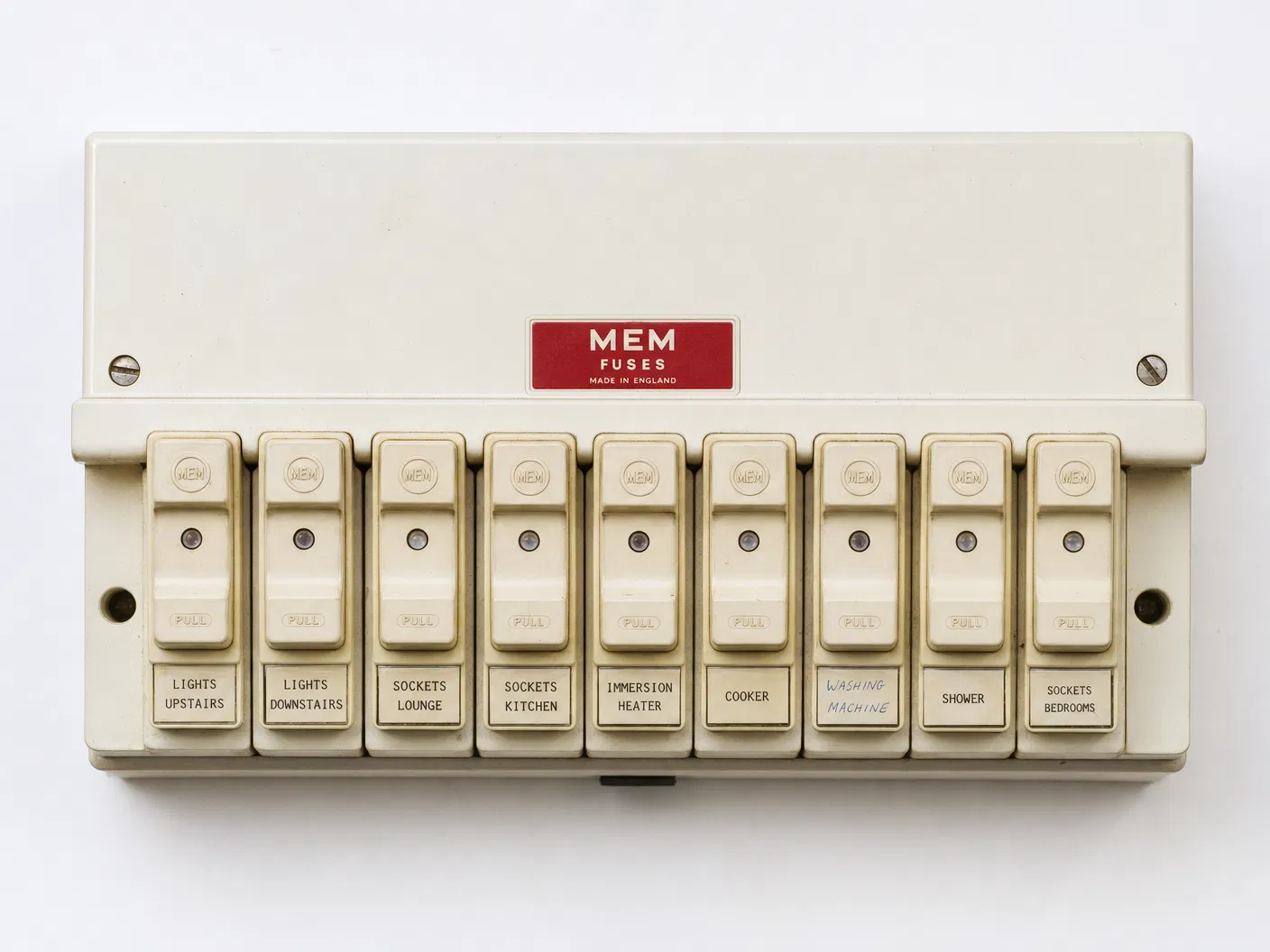
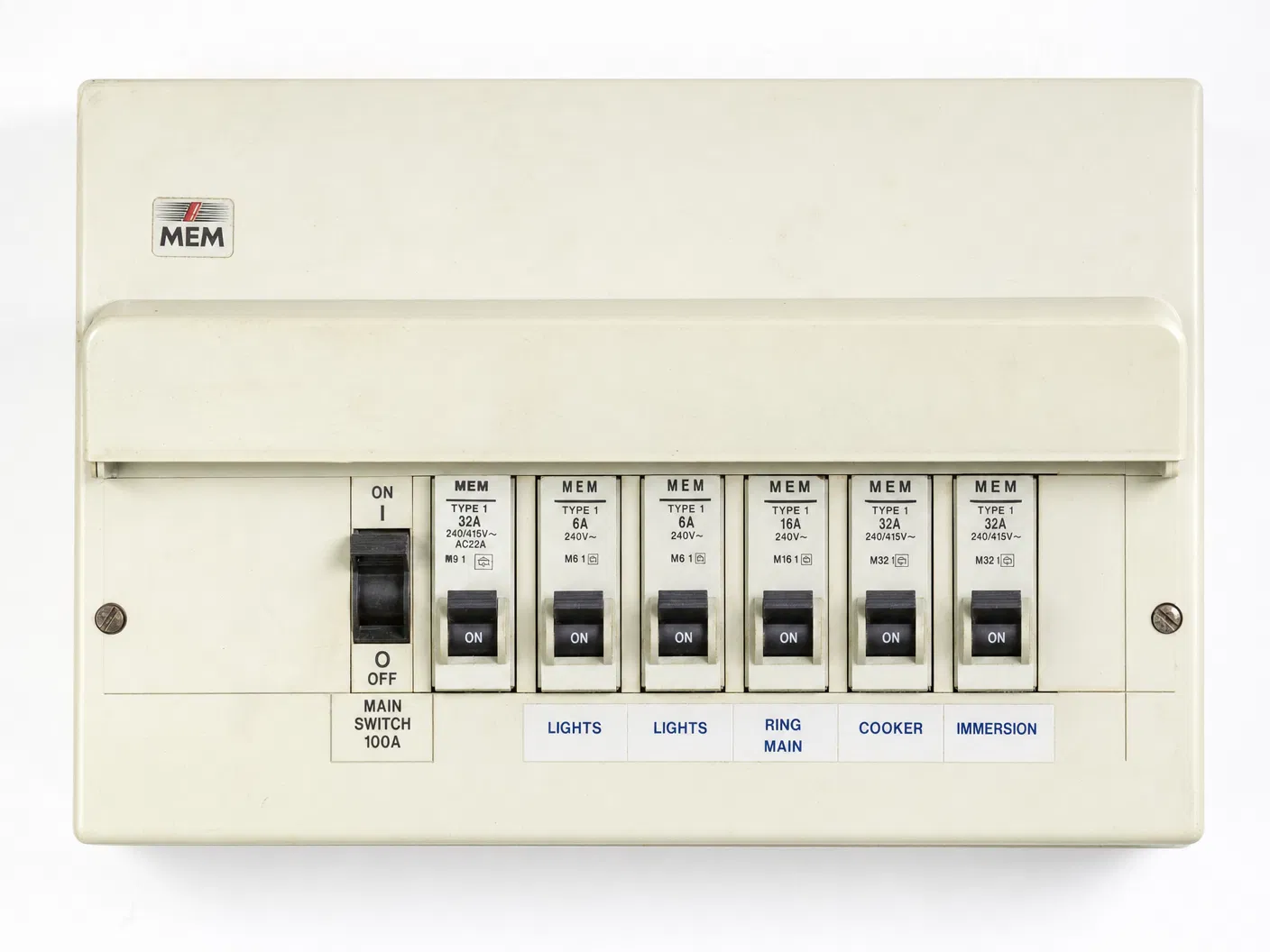
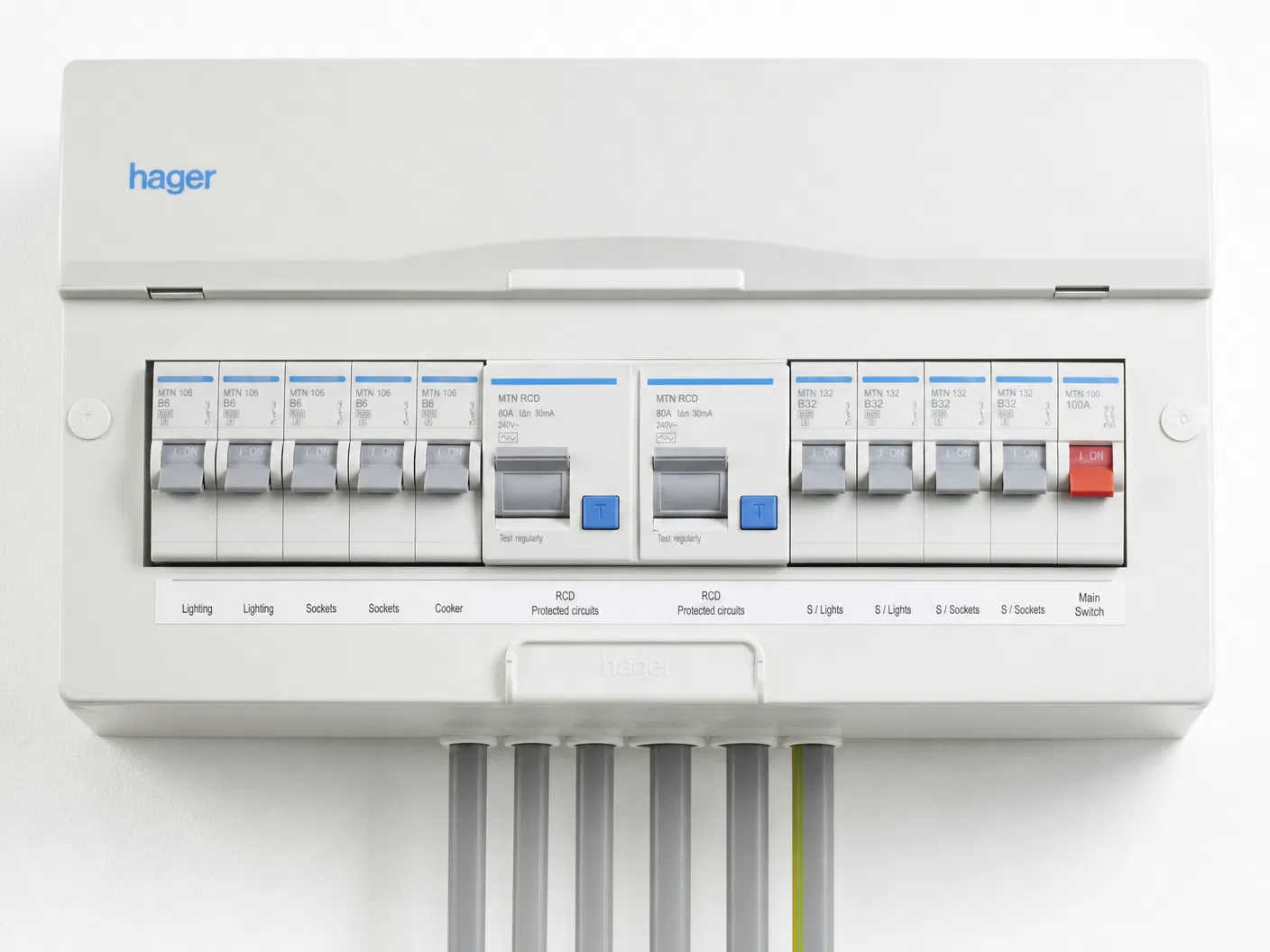
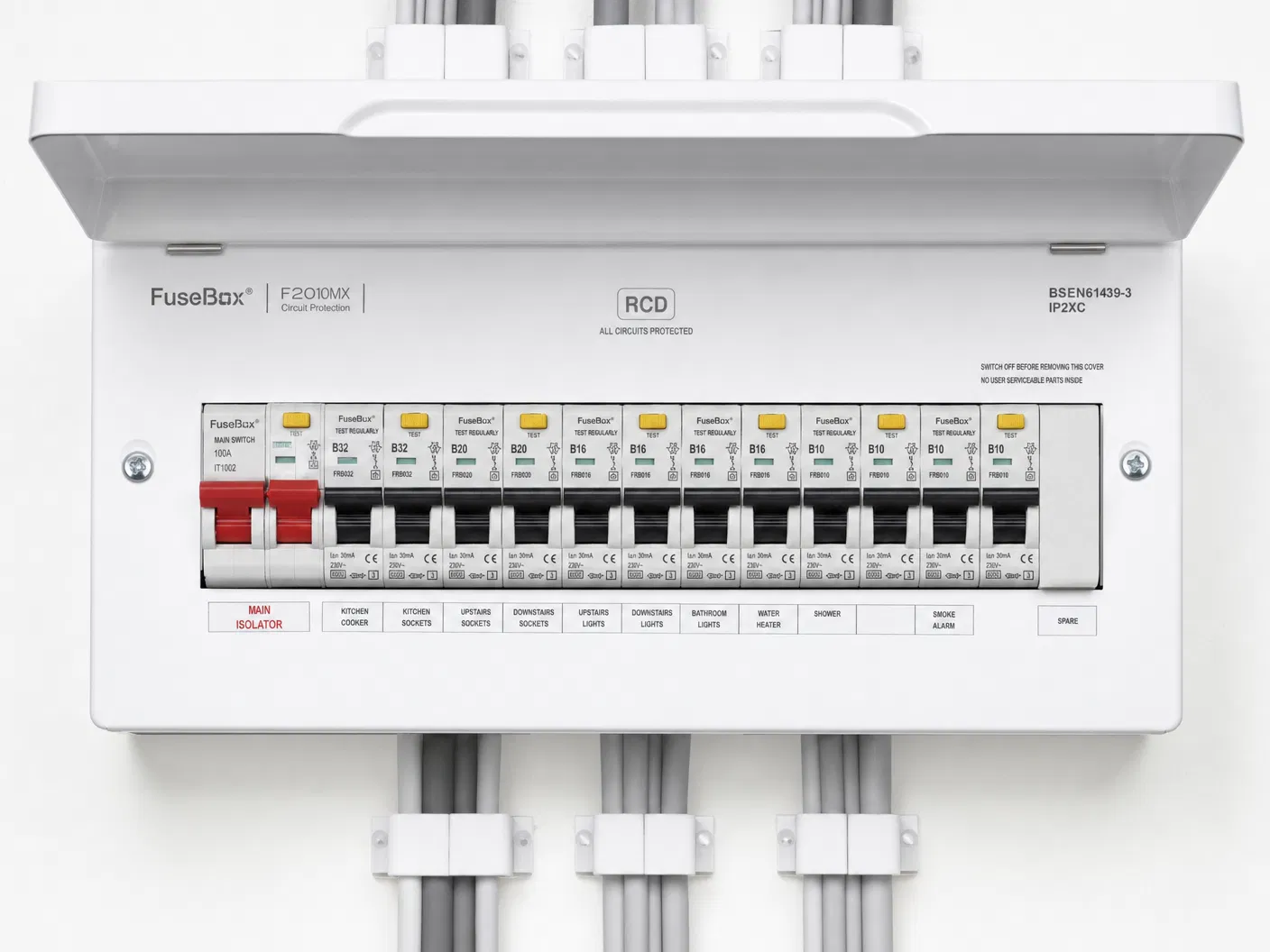
If your board has ceramic or cartridge fuses rather than miniature circuit breakers (MCBs), it almost certainly has no RCD protection and was installed before 1985. If you are unsure what type of board you have, a NICEIC-registered electrician can identify it quickly during a visit.
An RCD (Residual Current Device) is a safety device that monitors the flow of electricity through a circuit and cuts the power in as little as 30 milliseconds if it detects a fault — such as current flowing through a person who has touched a live wire. Without RCD protection, a fault that would be survivable with modern equipment can be fatal.
The Electrical Safety Council estimates that around 70 people die and 350,000 are injured in electrical accidents in UK homes each year. RCD protection is one of the most effective ways to reduce this risk — it is why the 18th Edition of the Wiring Regulations (BS 7671) requires RCD protection on virtually all circuits in new and rewired installations.
A rewirable fuse board provides no protection against electric shock. If a fault occurs on a circuit — a damaged appliance, a nail through a cable, a child touching a live terminal — the fuse will not blow fast enough to prevent a serious or fatal electric shock. An RCD cuts the power in 30 milliseconds.
Sittingbourne's older housing stock — particularly the Victorian and Edwardian terraces around the High Street, the post-war semis in Murston, Kemsley, and Borden, and the 1960s and 1970s estates throughout ME9 and ME10 — is disproportionately likely to have outdated electrical installations. Many of these properties have had extensions, kitchen refits, and loft conversions over the decades, which may have added new circuits to an already ageing board without ever replacing it.
The private rental sector in Swale is also significant. Since the introduction of the Electrical Safety Standards in the Private Rented Sector Regulations 2020, landlords are required to have an EICR carried out every five years. An old fuse board without RCD protection will almost always generate a C2 observation (potentially dangerous) on an EICR, which means the landlord cannot issue a Satisfactory certificate without carrying out remedial work — typically a consumer unit replacement.
You should seriously consider upgrading your consumer unit if any of the following apply to your Sittingbourne property:
A consumer unit replacement is a straightforward job for a NICEIC-registered electrician and typically takes between four and eight hours for a standard domestic property. The process involves isolating the main supply, removing the old board, installing the new consumer unit, connecting all existing circuits, testing every circuit to BS 7671 standards, and issuing the Electrical Installation Certificate and Building Regulations compliance certificate.
The power to the property will be off for most of the working day, so it is worth planning around this — particularly if you work from home. The electrician should provide a detailed test schedule showing the results for every circuit, which becomes part of the property's electrical records.
| Board Type | Typical Cost (ex-VAT) |
|---|---|
| Standard dual-RCD consumer unit (up to 12 way) | £650 |
| Large dual-RCD consumer unit (13–18 way) | £750 |
| RCBO consumer unit (individual circuit protection) | £850 |
| Consumer unit replacement as part of EV charger install | £500 (add-on price) |
All prices include supply of the new unit, installation, full testing to BS 7671, the Electrical Installation Certificate, and Building Regulations notification through NICEIC. There are no hidden extras for standard domestic installations in Sittingbourne and the surrounding ME postcodes.
For landlords in Sittingbourne, the answer is almost always yes. An EICR on a property with a rewirable fuse board will generate at minimum a C2 observation, which means the report cannot be issued as Satisfactory. The landlord then has 28 days to carry out the remedial work and provide evidence to the local authority. Doing the consumer unit replacement proactively — before the EICR — is cleaner, cheaper, and avoids the pressure of a 28-day deadline.
For homeowners, upgrading before adding a new high-load circuit (EV charger, AC unit, garden office) makes practical sense. A new consumer unit gives you the spare capacity and the correct protection for the new circuit, and means the whole installation is brought up to current standards in a single visit.
Kent Trade Solutions is NICEIC-registered and carries out consumer unit replacements across Sittingbourne, Medway, Faversham, Canterbury, and the surrounding areas. We provide a free assessment, a fully itemised quote within 24 hours, and complete all certification on the day of the job. For landlords with multiple properties, we offer competitive rates for portfolio bookings.
Not sure what type of board you have? We offer a free visual assessment — call us on 07801 549163 or use the contact form and we can usually advise within 24 hours based on a photo, or arrange a visit at a time that suits you.

Kent Trade Solutions
NICEIC-registered Electrician & Refcom-certified AC Engineer, Sittingbourne, Kent
Call us for a free quote or to discuss any electrical or air conditioning work across Kent.