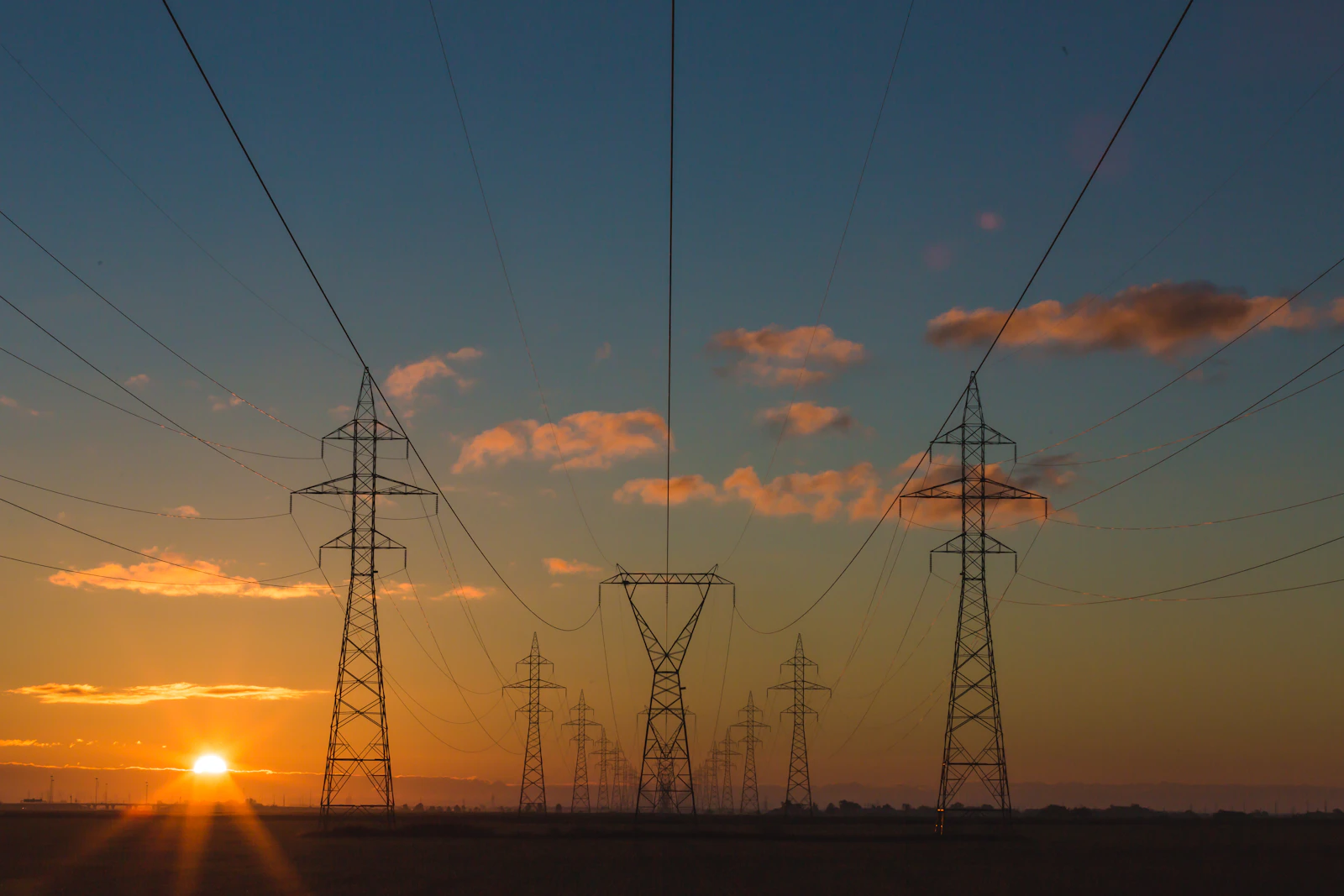
Three-Phase Power for Kent Businesses: Do You Need It and How to Get It
When single-phase power is no longer enough — a practical guide to three-phase electrical supplies for commercial and industrial premises in Kent
The vast majority of homes and small businesses in the UK are supplied with single-phase electricity — a 230V supply delivered via a live, neutral, and earth conductor. For most purposes this is perfectly adequate: it can power lighting, heating, computers, and most commercial equipment without difficulty. But as businesses grow, install larger machinery, or take on high-demand processes, single-phase power can become a limiting factor. Three-phase power delivers three times the capacity of a single-phase supply at the same voltage, and it is the standard supply for industrial premises, large commercial buildings, and any site with significant motor-driven equipment.
This guide explains what three-phase power is, how to tell whether your business needs it, what is involved in upgrading from single-phase to three-phase, and what it costs across Kent in 2026.
What Is Three-Phase Power?
A three-phase supply delivers three separate alternating current (AC) waveforms, each offset by 120 degrees from the others. In a standard UK three-phase supply, each phase delivers 230V between the phase conductor and neutral, and 400V between any two phase conductors. This means a three-phase supply can deliver up to three times the power of a single-phase supply using conductors of the same size, which is why it is the standard for high-power applications.
Three-phase motors are also more efficient and smoother-running than single-phase motors of equivalent power, because the three offset waveforms produce a rotating magnetic field that drives the motor continuously rather than in pulses. This is why three-phase power is standard for compressors, CNC machines, lifts, large HVAC systems, and other motor-driven equipment.
Do You Need Three-Phase Power?
The most common triggers for a three-phase upgrade in Kent businesses are: installing equipment that requires a three-phase supply (such as a large compressor, a commercial oven, or a CNC machine); reaching the capacity limit of the existing single-phase supply (typically 100A, equivalent to about 23 kW); installing multiple EV chargers; or connecting a large solar PV system with battery storage. The following table summarises the typical demand levels that indicate a three-phase supply may be needed.
| Scenario | Typical Demand | Three-Phase Required? |
|---|---|---|
| Small office / retail unit | Up to 15 kW | No — single-phase 100A sufficient |
| Restaurant / commercial kitchen | 20–60 kW | Usually yes — large ovens and extraction |
| Workshop with machinery | 15–80 kW | Depends on equipment — check motor ratings |
| EV charging hub (4+ chargers) | 30–150 kW | Yes — each 22 kW charger requires three-phase |
| Industrial unit / factory | 50–500 kW+ | Yes — standard for all industrial premises |
| Large HVAC / chiller system | 20–100 kW | Yes — compressors are three-phase motors |
| Data centre / server room | Variable | Yes — UPS and cooling systems are three-phase |
How to Get a Three-Phase Supply
Getting a three-phase supply involves two distinct elements: the network connection (provided by your Distribution Network Operator, or DNO) and the internal electrical installation (carried out by a qualified electrician). The DNO for most of Kent is UK Power Networks. They are responsible for bringing the three-phase supply to your premises — either by upgrading an existing single-phase connection or by installing a new service cable from the nearest three-phase distribution point.
The process typically works as follows: your electrician assesses your demand requirements and specifies the supply capacity needed; you (or your electrician on your behalf) apply to UK Power Networks for a new or upgraded connection; UK Power Networks quotes for the network reinforcement work and installs the new service cable and meter; your electrician then installs or upgrades the internal distribution board and wiring to make use of the new supply. The network connection and the internal installation are separate contracts, and both must be completed before the new supply can be energised.
UK Power Networks typically takes 4–12 weeks to complete a new three-phase connection, depending on the complexity of the network reinforcement required. In some cases — particularly on industrial estates where three-phase infrastructure is already nearby — the connection can be completed more quickly. Your electrician can liaise with UK Power Networks on your behalf and advise on realistic timescales for your specific location.
Three-Phase Upgrade Costs in Kent: 2026 Guide
The cost of a three-phase upgrade has two components: the DNO connection charge (paid to UK Power Networks) and the internal electrical installation cost (paid to your electrician). The DNO charge varies significantly depending on how far the nearest three-phase network point is from your premises and what reinforcement work is required. The internal installation cost depends on the size of the new distribution board, the number of circuits to be upgraded, and the length of the cable runs.
| Element | Typical Cost (exc. VAT) | Notes |
|---|---|---|
| DNO connection charge (simple upgrade) | £1,500–£5,000 | Where three-phase infrastructure is nearby |
| DNO connection charge (network reinforcement required) | £5,000–£30,000+ | Where new cables or substation work is needed |
| Three-phase distribution board (100A) | £1,500–£3,000 | Including installation and certification |
| Three-phase distribution board (200A+) | £3,000–£6,000 | For larger premises with high demand |
| Internal wiring upgrades (per circuit) | £300–£800 | Upgrading existing circuits to three-phase |
| Three-phase sub-main to outbuilding | £1,000–£4,000 | Depending on distance and cable size |
All commercial electrical work is subject to 20% VAT. The total cost of a three-phase upgrade for a typical commercial unit in Kent — including the DNO connection and a new 100A distribution board — is typically £4,000–£12,000 plus VAT, depending on the network connection complexity. For industrial premises with high demand or remote network infrastructure, costs can be considerably higher.
Balancing Three-Phase Loads
One of the most important considerations when designing a three-phase installation is load balancing — distributing the electrical loads as evenly as possible across the three phases. An unbalanced three-phase supply (where one phase carries significantly more load than the others) is less efficient, can cause voltage fluctuations, and may result in additional charges from your energy supplier. A qualified electrician will design the distribution board to balance the loads at the design stage, and will advise on how to connect new equipment to maintain balance as the installation evolves.
Areas Covered
Kent Trade Solutions designs and installs three-phase electrical systems for commercial and industrial premises across Sittingbourne, Faversham, Maidstone, Canterbury, Ashford, Folkestone, Thanet, Medway, the Isle of Sheppey, and the wider Kent area. We can liaise with UK Power Networks on your behalf and manage the entire upgrade process from initial assessment to final certification.

Kent Trade Solutions
NICEIC-registered Electrician & Refcom-certified AC Engineer, Sittingbourne, Kent
Need help with your property?
Call us for a free quote or to discuss any electrical or air conditioning work across Kent.